Rates are coming down
The Central Bank kept the Selic at 15% from June 2025 to March 2026, then cut it five times to 13.75%. The market expects 13% by the end of 2027 (Focus survey, 19 Nov 2026).
Brazil real estate · November 2026
What the market, the economy and the law look like today, with every figure dated and sourced. Built for investors who are deciding from abroad.
Macro picture
Interest rates are falling from a high level, unemployment is at a record low and growth is slowing. Rates matter most for property, because they set the cost of mortgages.
The Central Bank kept the Selic at 15% from June 2025 to March 2026, then cut it five times to 13.75%. The market expects 13% by the end of 2027 (Focus survey, 19 Nov 2026).
Inflation was 4.63% over the 12 months to October, just above the 4.5% ceiling. The market expects about 5.1% for 2026 and 2027.
GDP grew 2.0% year on year in the second quarter of 2026. The market median is 1.7% for 2026 and 1.0% for 2027.
Sources: IBGE, Central Bank of Brazil (Copom minutes of 4 Nov 2026, Focus survey of 19 Nov 2026).
Activity
Brazil launched and sold more new homes in 2025 than in any year on record, even with the Selic at 15%. Mortgage lending is growing faster than the market.
Sales of new homes rose 5.4% in the first half of 2026, to 226,536 units, while launches stayed flat.
The federal Minha Casa Minha Vida programme made up a record 58% of launches nationally in the second quarter of 2026, but only 29% in the South.
About 355,000 new units were for sale at the end of June 2026. At the 20 largest developers, stock equals 13.5 months of sales, and cancellations reached 13.1% of sales.
CBIC covers 221 cities; Abrainc/Fipe covers the 20 largest listed developers, so their figures are not directly comparable. Housing deficit: Fundação João Pinheiro. Credit: Abecip.
Prices and rents
Florianópolis is among the two most expensive state capitals in Brazil, and its prices have risen faster than inflation every year since 2021. Its rents have grown more slowly, so the case here is appreciation rather than rental income.
Every year from 2021 to 2025 beat inflation. Source: FipeZAP yearly series.
| October 2026 | Average price per m² | Price change, 12 months | Rent change, 12 months | Gross rental yield |
|---|---|---|---|---|
| Florianópolis | R$13,690 | +8.61% | +3.45% | 5.41% |
| São José (next to Palhoça) | R$9,081 | +4.73% | +7.50% | 5.83% |
| Brazil (index) | R$10,065 | +5.44% | +9.01% | 6.13% |
| Inflation (IPCA) | – | +4.63% | +4.63% | – |
Source: FipeZAP residential sale and rental indices, October 2026. FipeZAP tracks asking prices in listings, not closed sales, and does not cover Palhoça. Cumulative figures are our calculation from the yearly series.
Santa Catarina
Santa Catarina is growing faster than almost any other state, it is the safest state in Brazil and it is one of the country’s two largest technology hubs. People are moving in, and Palhoça is where much of that growth lands.
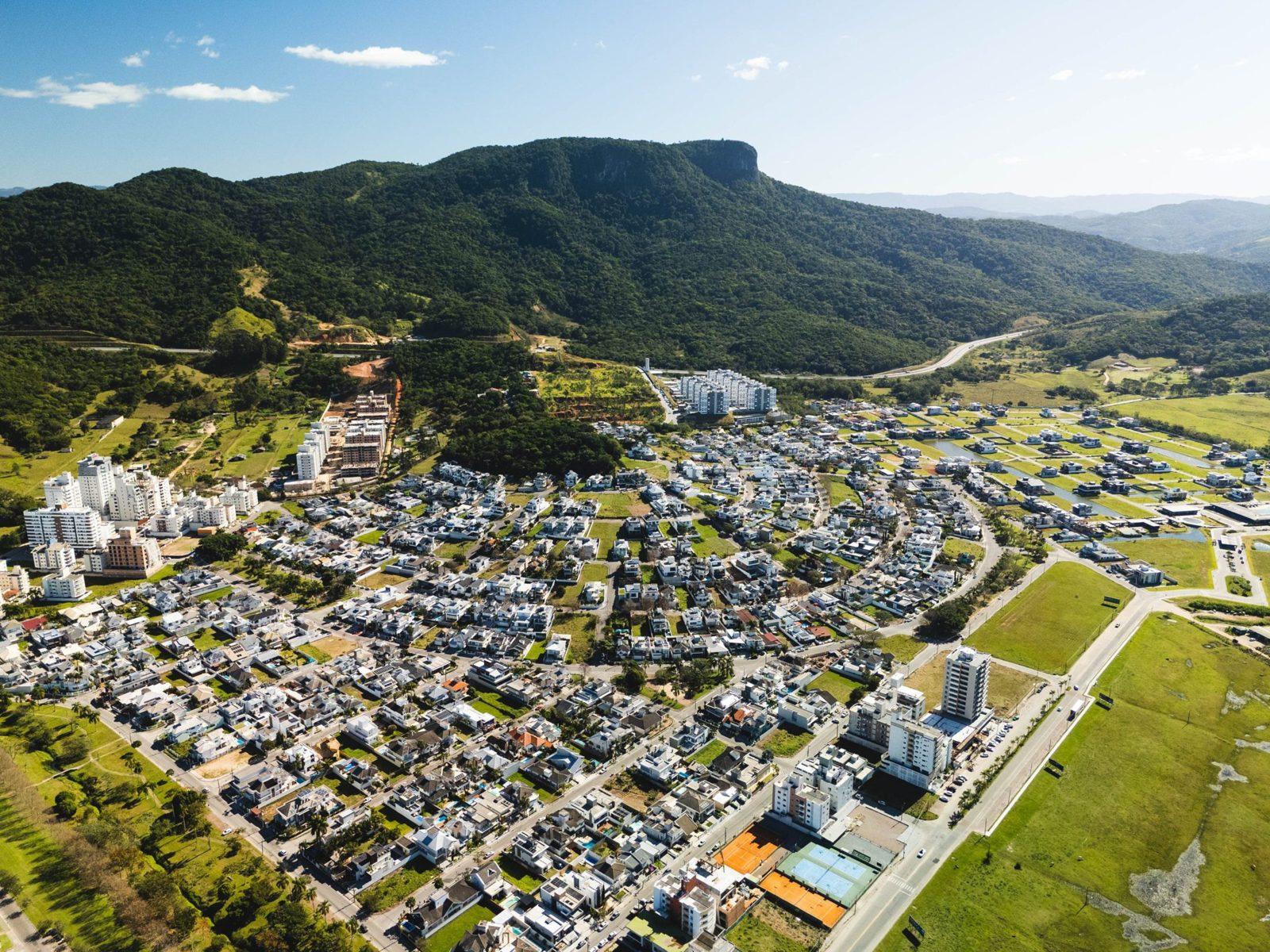
The city grew 62.1% between the 2010 and 2022 censuses, about 4.1% a year, roughly eight times Brazil’s rate. It added another 3.1% between 2025 and 2026.
Santa Catarina has the lowest violent-death rate in Brazil: 7.6 per 100,000 people in 2025, against 19.1 nationally.
GDP per person in Santa Catarina was R$67,460 in 2023, 5th among the 27 states and 25% above the national average.
About 34,200 technology companies and 102,200 tech jobs, the 2nd-largest tech employment in Brazil.
Florianópolis airport handled a record of about 5 million passengers in 2025, and 1 million international passengers, a mark only São Paulo and Rio airports had reached before.
A 2026 FGV study puts the economic impact of Airbnb in Florianópolis at R$5 billion, with more than 31,000 jobs.
Sources: IBGE (Census 2022, 2026 population estimates, regional accounts, IBGE Cidades), Anuário Brasileiro de Segurança Pública 2026, Observatório ACATE 2026, ANAC, Floripa Airport, FGV.
Legal framework
Foreigners, resident or not, can buy urban property in Brazil with the same title rights as Brazilians. The process has three practical steps.
The Brazilian tax number is required for any purchase. Non-residents can get it free at a Brazilian consulate or embassy, and it is issued electronically.
Funds enter through a formal foreign-exchange contract with an authorised bank. This record is what lets you send the proceeds back abroad later. Central Bank registration rules depend on the structure, so confirm with your bank or lawyer.
A public deed (escritura) is required above 30 minimum wages, and ownership passes only when the deed is registered at the property registry. Off-plan buyers sign a promise of purchase until delivery.
Taxes and costs
| Item | Rate | Notes |
|---|---|---|
| Transfer tax (ITBI) | About 2% to 3% | Florianópolis 2%; Palhoça 2% to 2.5% (confirm with the city). Paid before the deed is registered. |
| Notary and registry fees | State fee table | Scale with the property value up to a ceiling, updated every January by the Santa Catarina courts. |
| Capital gains tax on a sale | 15% | On the gain up to R$5 million; 17.5%, 20% and 22.5% on larger gains. The same table applies to non-residents. |
| Rent paid to a non-resident | 15% withheld | 25% for beneficiaries in low-tax jurisdictions. Tax treaties prevail. Withheld by the tenant or your local attorney. |
| Annual property tax (IPTU) | Set by each city | Based on the assessed value of the property. |
| Tax reform | From 2026–2027 | New consumption taxes on rentals mainly for individuals with more than R$240,000 of rent a year and more than three properties. |
Residents have capital-gains exemptions (a single property sold for up to R$440,000, or reinvestment in another home within 180 days); we have not confirmed that they apply to non-residents. Sources: Receita Federal (MAFON 2023), Law 13.259/2016, municipal tax codes. Confirm your own case with a tax adviser.
Off-plan (na planta)
Most new homes in Brazil are sold before or during construction. The buyer pays in stages and receives the keys at delivery.
A down payment, monthly installments during construction, usually indexed to the INCC construction-cost index (+6.75% over the 12 months to October 2026, above inflation), and the balance at delivery, in cash or through a bank loan.
Under the patrimônio de afetação regime (Law 10.931/2004), each project’s money and assets are kept apart from the developer’s other debts and can only be used to finish that project.
Law 13.786/2018 caps the penalty when a buyer cancels at 25% of what was paid, or 50% in a ring-fenced project. Buyers have 7 days to withdraw from contracts signed at a sales stand.
A delay of up to 180 days is allowed if the contract says so. Beyond that, the buyer can cancel and get everything back within 60 days.
There is no reliable national statistic on price gains from launch to delivery. A 2019 study of 37 units in Greater Florianópolis (2012–2019, a flat market) found no gain above inflation. Results depend on the project and the timing.
Sources: Law 10.931/2004, Law 13.786/2018, FGV INCC via the Central Bank, IFSC study (2019).
Rental rules
A lease of 30 months or more ends at term without notice; shorter leases renew indefinitely. A cash deposit is capped at three months of rent, and either side can ask a court to reset the rent to market after three years.
Contracts of up to 90 days, with all the rent payable upfront. This is the legal basis for holiday rentals.
In May 2026 the Superior Court of Justice ruled, 5 to 4, that short stays in residential condominiums need express authorisation in the building’s convention. The ruling is not binding, but check each building before planning short-term rentals.
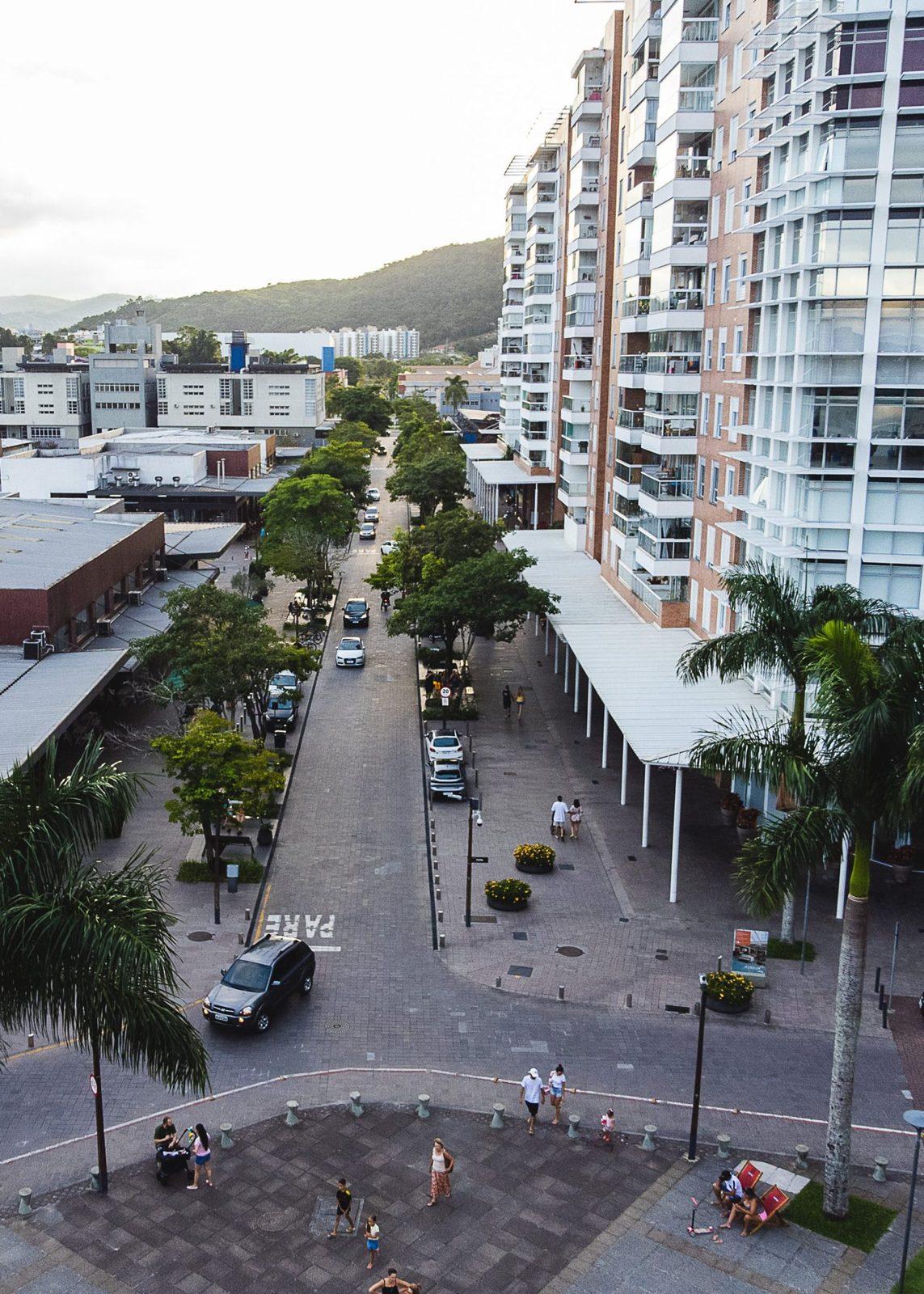
At the Florianópolis average of R$62 per m², a 55 m² apartment would rent for about R$3,400 a month. In Pedra Branca, Garden Club I rents at R$2,700 unfurnished and up to R$3,500 furnished.
Sources: Law 8.245/1991 (Tenancy Law), STJ REsp 2.121.055 (7 May 2026), FipeZAP rental index. The Pedra Branca rents are from the developer’s market study.
Mortgages
Non-residents usually buy with cash. Local buyers mostly finance, and the range of mortgages available to them supports resale demand for mid-market apartments.
| Minha Casa Minha Vida (from March 2026) | Monthly family income | Property cap |
|---|---|---|
| Band 3 | Up to R$9,600 | R$400,000 |
| Band 4 | Up to R$13,000 | R$600,000 |
Sources: Caixa rate table (via B3 Bora Investir, March 2026), Ministry of Cities (MCMV), FGTS council via Agência Brasil.
Risks
The real was at 5.86 per US dollar on 24 November 2026, after a 12-month range of 4.90 to 5.97. A weaker real cuts profits measured in dollars; a stronger one adds to them.
With the Selic at 13.75% and inflation at 4.6%, the real policy rate is near 8.7%. Gross rental yields are well below that, so property here is a bet on appreciation.
Cancellations reached 13.1% of sales at large developers in January–August 2026, and 21.8% in the mid and high-end segment.
Price indices track listings. Real sale prices can be lower, especially in a slow market.
The tax reform phases in new consumption taxes from 2026–2027, and courts are still settling the rules for short-term rentals.
Construction can be late. Ring-fencing, the distrato law and bank oversight reduce the risk but do not remove it.
For an investor who thinks in dollars, the currency matters as much as the property. Since 2020 the real has stayed in a band of about 5 to 6 per dollar, while other emerging-market currencies lost most of their value.
Yearly averages of the Central Bank of Brazil PTAX rate; * 2026 is the average from January to 24 November. Value kept compares the 2021 average with the rate in November 2026 (real: 5.40 to 5.86). Euro, pound and lira from US Federal Reserve averages and market rates in November 2026.
Yes. Foreigners, resident or not, can buy urban property with full title. Limits apply only to rural land and to rural property near land borders. You need a CPF, the Brazilian tax number.
No. The CPF can be issued by a Brazilian consulate, contracts can be signed electronically, and a local attorney can sign the deed for you with a power of attorney.
Yes, when the money entered Brazil through a formal foreign-exchange contract with an authorised bank. Keep those records; they are what allows the return transfer.
15% on the capital gain up to R$5 million, with higher rates on larger gains. The same table applies to non-residents. Some exemptions exist for residents.
15% is withheld at source as a final tax, or 25% for residents of low-tax jurisdictions. A tax treaty between Brazil and your country can change this.
Buyers are protected by ring-fenced projects, a law that caps cancellation penalties and, for many projects, bank review before launch. The main risks are delays, cancellations and the market at delivery.
It depends on the building. Since a May 2026 court ruling, short stays in residential condominiums need express authorisation in the building’s convention. Long-term rental is always allowed.
Prices rose about 71% from 2021 to 2025, the population is growing fast, the state is the safest in Brazil and quality of life is high. Rental yields are lower than the national average, so the case is growth, not income.
Figures as of November 2026. We update this page as new data is released.
This page summarises public data for information only. It is not financial, legal or tax advice, and figures may change. Confirm your own situation with a qualified adviser.
See the project we are working on in Pedra Branca, or talk to our team about your goals.